
What is a Sole Trader?
Starting your own business for the first time can be an exciting yet daunting experience. Before you can begin trading there are a number of important decisions you have to make that will affect your business in a number of ways. This ranges from the type and amount of tax that you pay to your legal liability should the business find itself in any trouble. In this article we explore one of the most popular UK legal structures by which you can do business; the Sole Trader. Being a Sole Trader means you are responsible for your business as an individual. You can run your business on your own or employ your own staff to run the business.
What are the Responsibilities of a Sole Trader
Compared to a Limited Company, a Sole Trader gets away from the hassle of registering with and filing annual statutory accounts to the Companies House. However, you still need to comply with the following:
1. Taxes
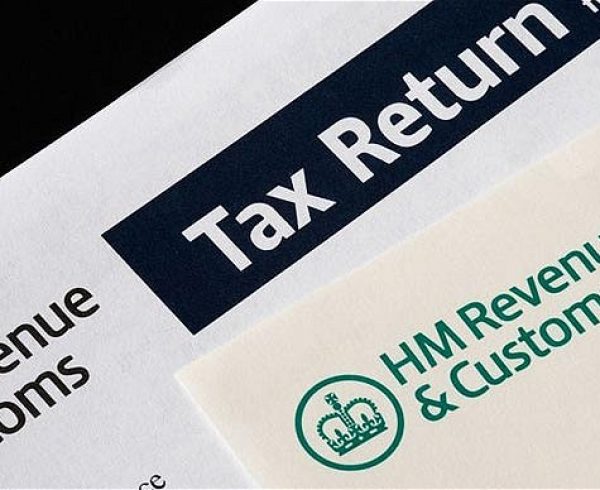
As a Sole Trader, you will have to register with HMRC as a self-employed Sole Trader and file your annual Self-Assessment Tax Return. You may also be liable to pay Income Tax (if you have taxable income) and withhold Value-Added Tax or VAT (if your VAT turnover is over £83,000).
2. National Insurance
As a Sole Trader, you will need to pay Class 2 NI contributions of £2.80 per week and Class 4 contributions dependent on profits in excess of £8,060.
3. Creditors
As a Sole Trader, there is little distinction between you and the business. Thus, any business debts or liabilities become your personal debts and your personal assets - including your house - are not protected.
4. Records
As a Sole Trader, you will need to keep records of your business sales and expenses since HMRC may look into this in relation to their review of your tax returns.
How to Set-up as a Sole Trader
Now that you know what a Sole Trader means and what your duties as a Sole Trader are, it is time to look at the steps on how to set-up a Sole Trader.
Step 1. Choose a name for your business
You can either use your own name or trade under a business name. In deciding what business name to use, you will need to comply with Companies House rules – even if you are not registering with them. Here are some of the do’s and don’ts:
- Don’t use a business name that’s exactly the same as or something similar to an existing registered company or business name.
- Do take out the word ‘Limited’, ‘Ltd’, ‘limited liability partnership’, ‘LLP’, ‘public limited company’ or ‘plc’ because these are associated with limited companies and limited partnerships and should only be used by them to avoid confusion.
- Don’t use a trademark unless you own the trademark.
- Don’t use sensitive words or expressions and words that could imply a government connection. But, do feel free to use them if you have obtained permission.
Step 2. Register with HMRC
Once you have chosen your business name, you must register with HMRC for Self Assessment and Class 2 National Insurance. This can be done online or via post.
You can start your business before registering but you must register by 5 October in your business’s second tax year. You will be fined if you fail to do so.
Step 3. Register for VAT
If your turnover is over £83,000, it is mandatory for you to register for VAT. You can register for VAT online or by post.
However, you can opt to register voluntarily if it suits your business. This is advantageous to you when you sell to other VAT-registered businesses and you want to reclaim the VAT. The downside is that while you wait for your VAT registration certificate to be issued to you, you can’t charge or show VAT in your invoices but you still have to pay the VAT to HMRC for this period. Thus, a common work around is to increase your prices to allow for this. Once you receive your VAT registration certificate, you can then reissue the invoices showing the VAT. The tricky part though is coming up with a way to explain to your customers why you’re doing this.
Helpful links:
- See whether the name you have in mind is already registered: https://www.gov.uk/get-information-about-a-company
- Check out the list of sensitive words or phrases and where to get permission to use them here: https://www.gov.uk/government/publications/incorporation-and-names/annex-a-sensitive-words-and-expressions-or-words-that-could-imply-a-connection-with-government.
- Registering with HMRC online (if you’ve sent a return before): https://online.hmrc.gov.uk/shortforms/form/CWF1ST?dept-name=CWF1&sub-dep
- Registering with HMRC online (if you have not sent a return before – first timers): https://online.hmrc.gov.uk/registration/newbusiness/introduction
- Registering for VAT online: https://online.hmrc.gov.uk/registration/newbusiness/business-allowed
And that’s it. Being self-employed and running your own business sounds very attractive. It only takes three steps to set-up a Sole Trader. But, keep in mind that it also requires some paperwork to keep the business running.
If you have any further questions about being a Sole Trader, or if you would like to learn more about PSI Accountancy and how we can help you, you can visit our homepage here for more information.












2 comments